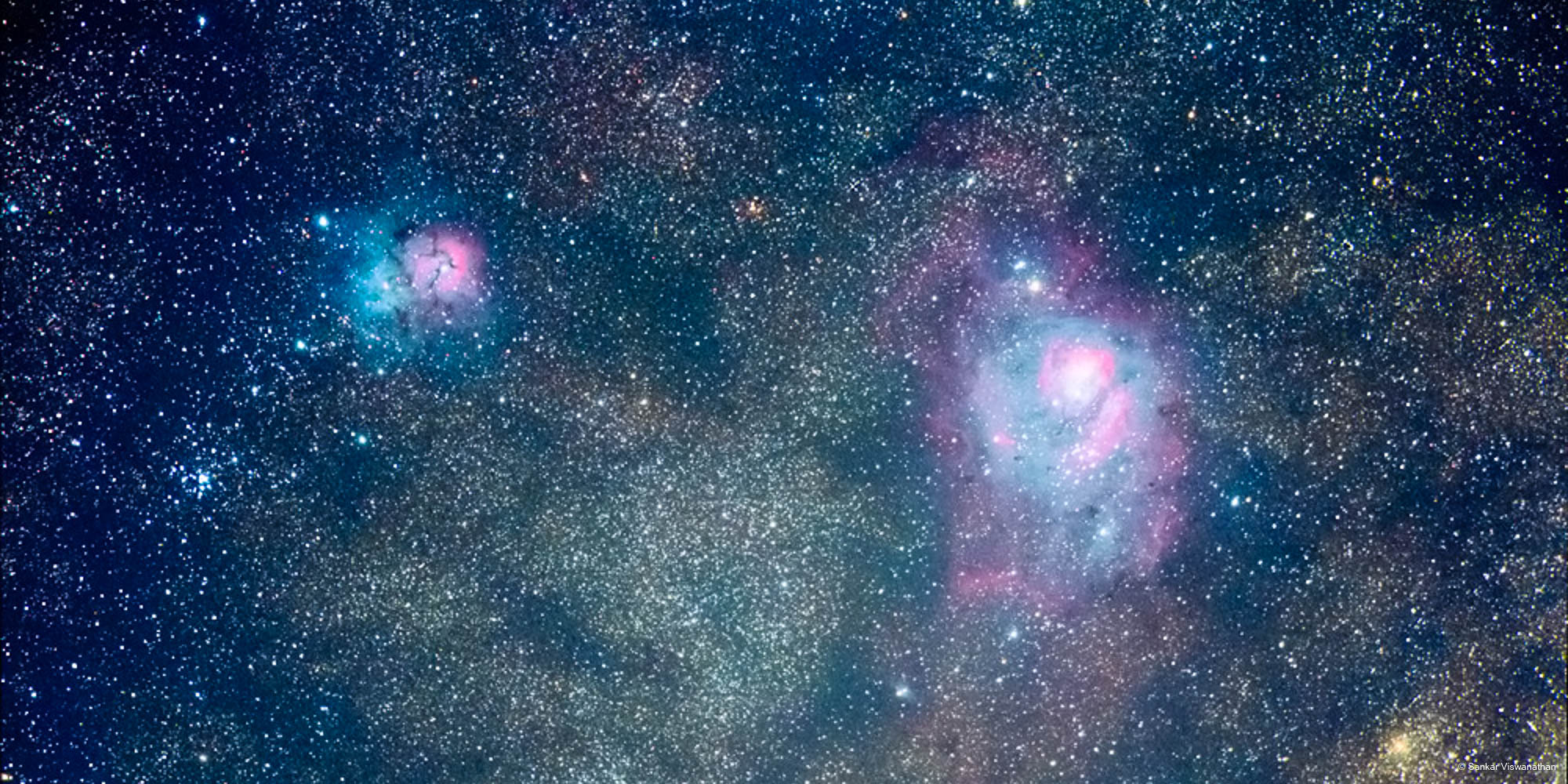
Space and Astronomy Visualizations
I build interactive, scientifically accurate space and astronomy visualization tools using real ephemeris data from
NASA's JPL Horizons platform.
What started in 2013 as a 2D animation for India's Mars Orbiter Mission has evolved into a
unified portal covering 40+ international lunar missions
including NASA's Artemis II, ISRO's Chandrayaan missions, and the Apollo heritage flights.
More recently, I have built tools for satellite conjunction analysis
and planetary alignment visualization.
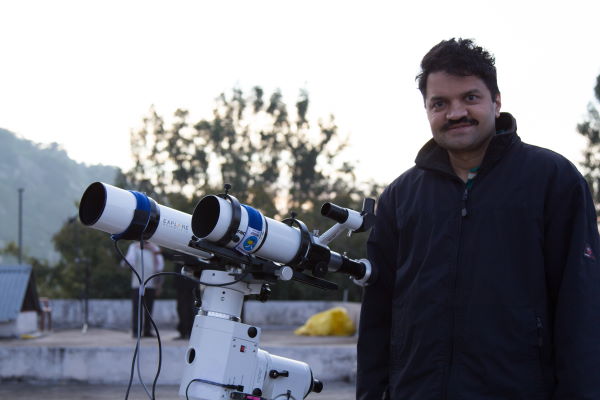
I have conducted educational outreach sessions on space missions and astronomy at universities and astronomy clubs,
and the tools and talks have been well received in the astronomy community.
All source code is available on my GitHub under the MIT license.
Featured Outreach & Media
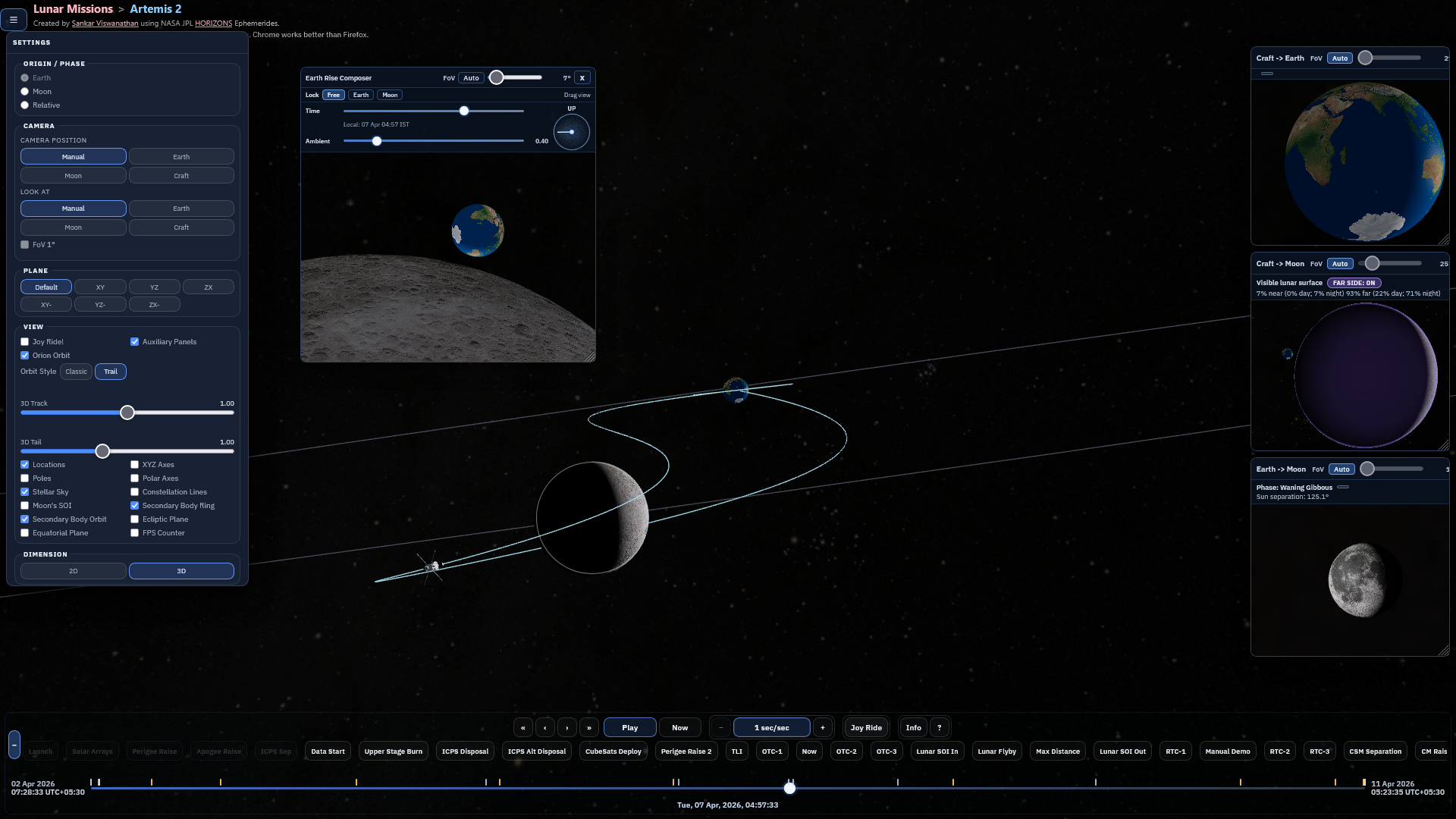
Artemis II
Real-time 3D visualization of NASA's Artemis II lunar flyby mission.
Track flyby events including Lunar SoI entry/exit, Earth-set, Earth-rise, eclipse, and closest approach.
Compose predicted Earthset and Earthrise views from the crew's perspective.
Built on the Lunar Missions platform using JPL Horizons orbit data.
GitHub |
Live
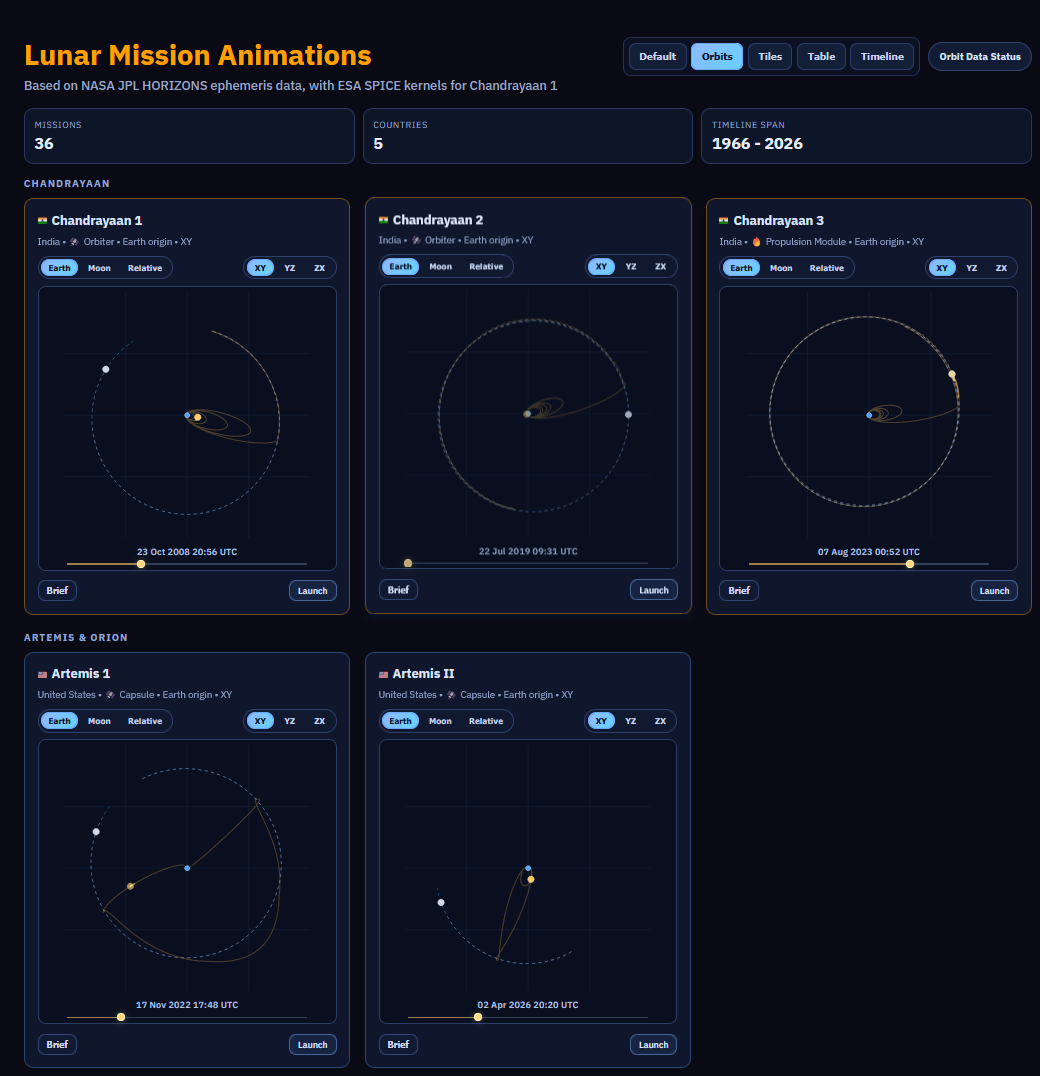
Lunar Missions Portal
A unified visualization platform for 40+ international lunar missions
including Artemis II, Chandrayaan-3, Apollo, and more. Features 2D (D3/SVG) and 3D (Three.js) rendering,
multiple reference frames, engine burn visualization, timeline scrubbing,
and a "Joy Ride" co-orbital flight mode. Uses real JPL Horizons ephemeris data.
GitHub |
Live
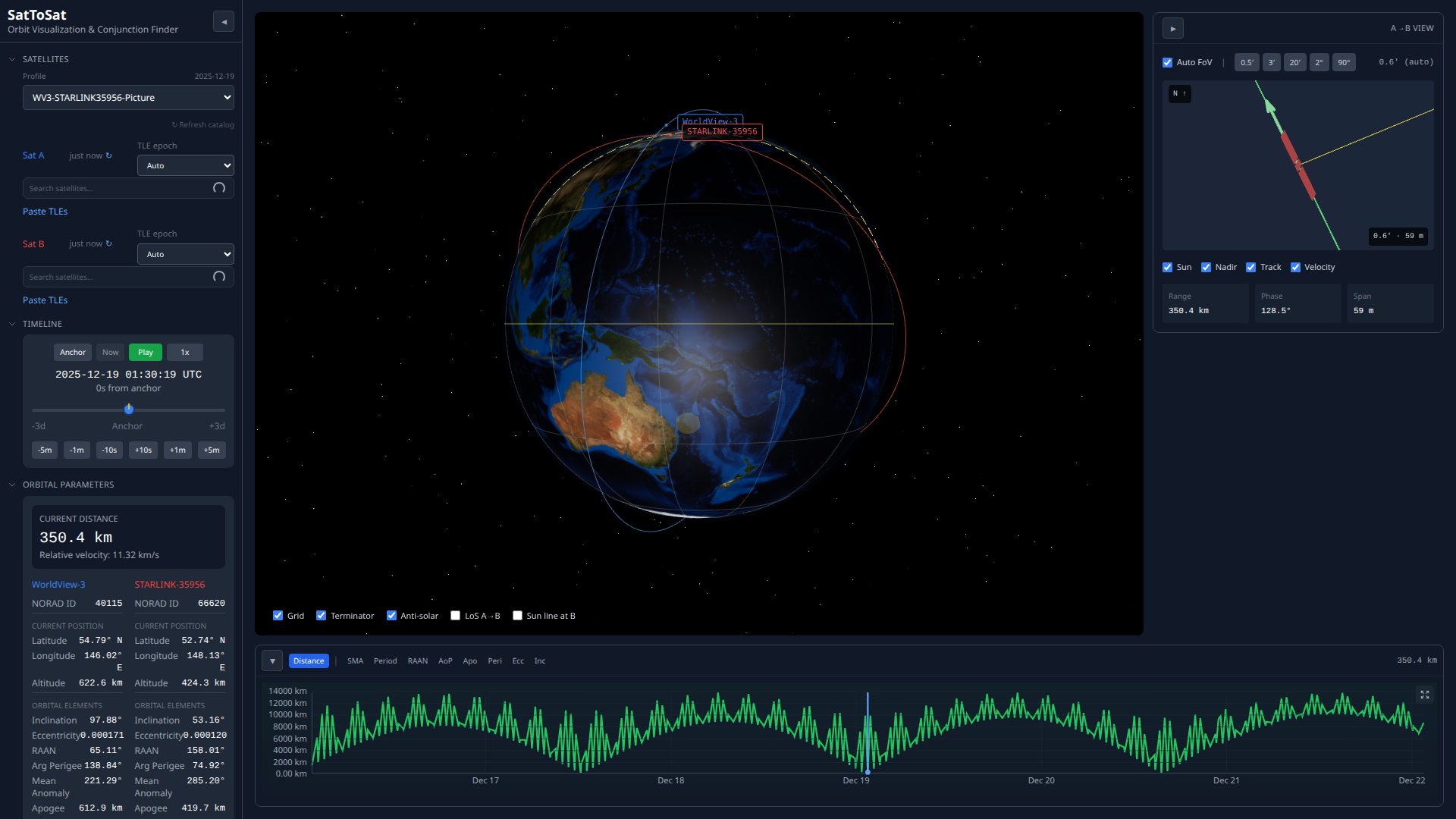
SatToSat
A satellite orbit visualization and conjunction analysis tool.
Select two satellites, visualize their orbits on a 3D globe, and find close approaches
with 100ms precision. Features distance timeline graphs, relative satellite views
with field-of-view presets, and automatic TLE fetching from Celestrak.
GitHub |
Live

Planet Parade
An interactive planetary alignment analyzer and sky visualization tool.
Find the best dates to see multiple planets at once, visualize their positions in 3D,
and explore the sky as seen from Earth. Features a 3D solar system, alignment timeline,
ecliptic sky view, and stereographic sky charts with stars, constellations, and the Milky Way.
Works on desktop and mobile with responsive layouts.
GitHub |
Live |
GitHub Pages
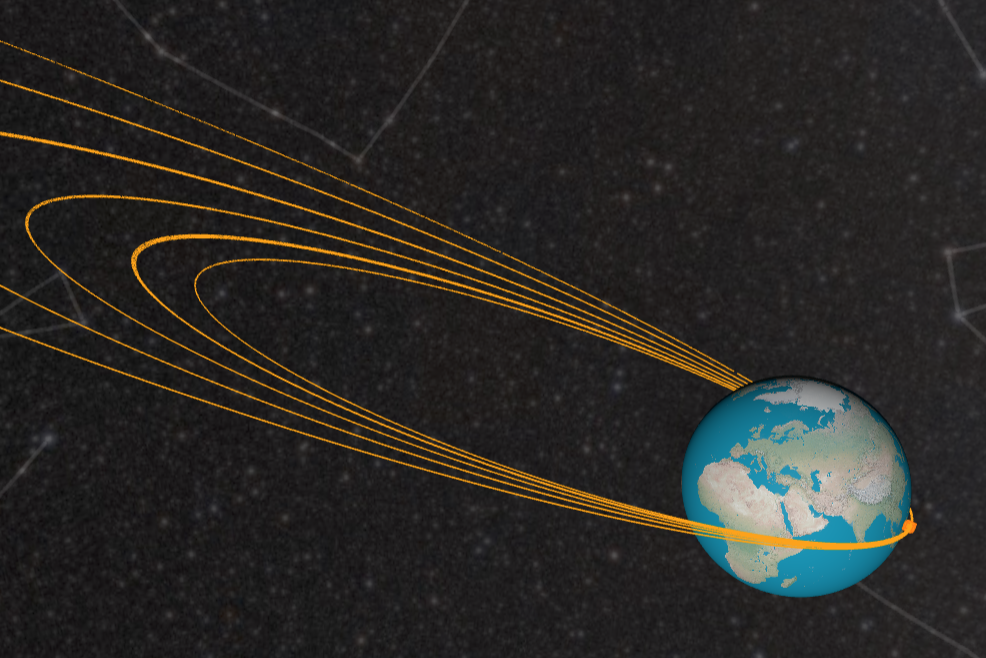
Chandrayaan-3 Animation
Chandrayaan-3 (ISRO, Wikipedia)
is the third lunar exploration mission developed by the Indian Space Research Organisation,
and comes after Chandrayaan-2. It consists of a lunar propulsion module, and includes the Vikram lander, and the Pragyan lunar rover,
all of which were developed in India. It was launched on 14 July 2023. It did a successful soft landing on the Moon on 23rd August, 2023.
Live |
GitHub
·
Legacy |
GitHub
·
Talk |
Slides |
Mission Design Tool
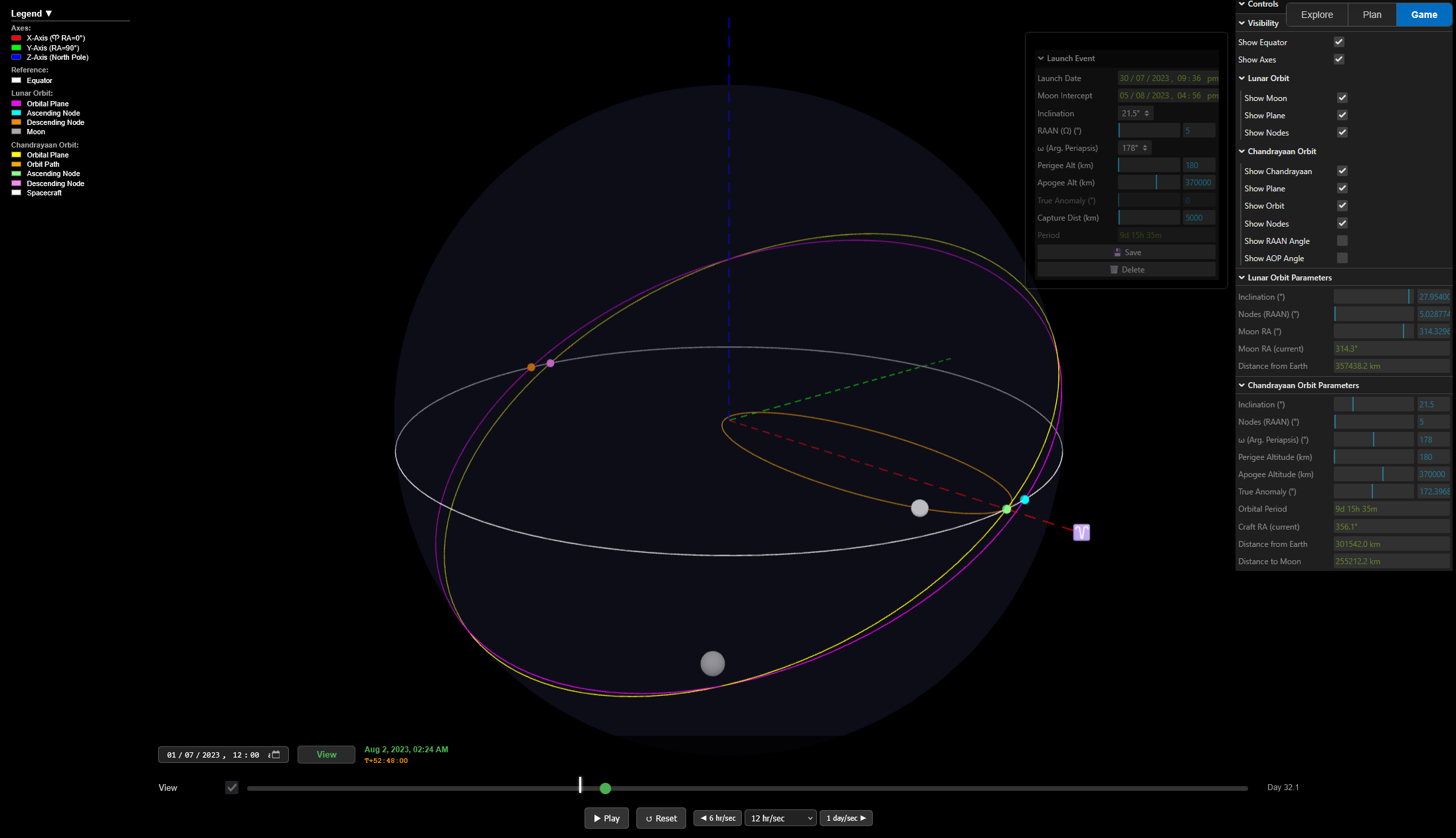
Chandrayaan-3 Mission Design Tool
An interactive 3D educational tool for learning orbital mechanics through Chandrayaan-3's mission design.
Features three modes: Explore (manual control), Plan (mission planning with real lunar ephemeris),
and Game (playback with capture detection).
Built with Three.js and astronomy-engine for accurate celestial mechanics.
GitHub |
Live Demo
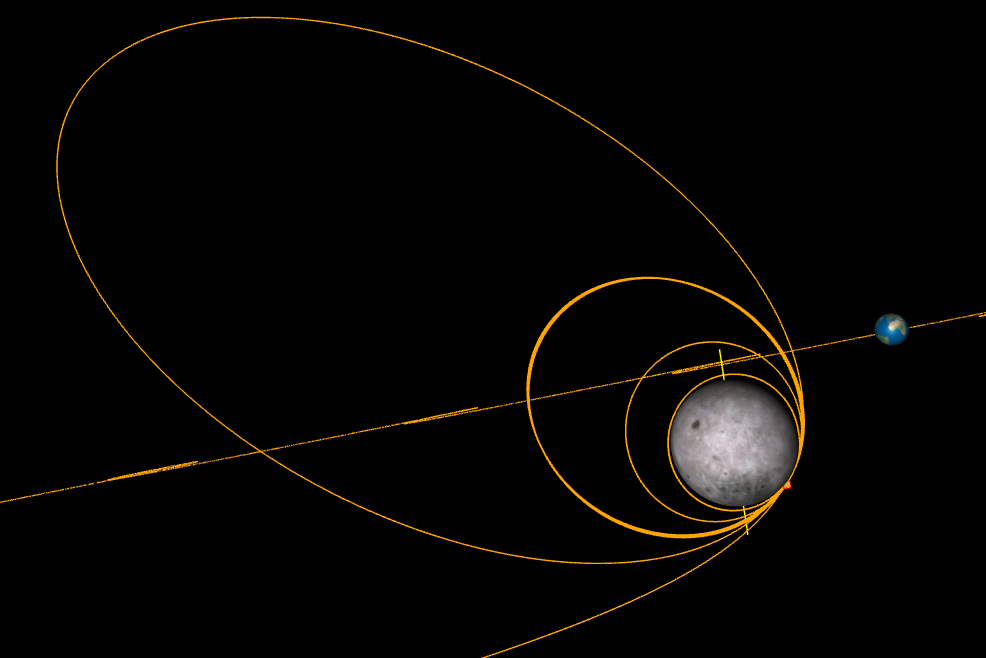
Chandrayaan-2 Animation
Chandrayaan-2 (ISRO, Wikipedia)
is the second lunar exploration mission developed by the Indian Space Research Organisation,
after Chandrayaan-1. It consists of a lunar orbiter, and included the Vikram lander, and the Pragyan lunar rover,
all of which were developed in India. It was launched on 22 July 2019. Lunar orbit insertion was done on 22 August 2019.
The Vikram lander crashed on the lunar surface very close to an attempted soft landing on 6 September 2019.
Live |
GitHub
·
Legacy |
GitHub
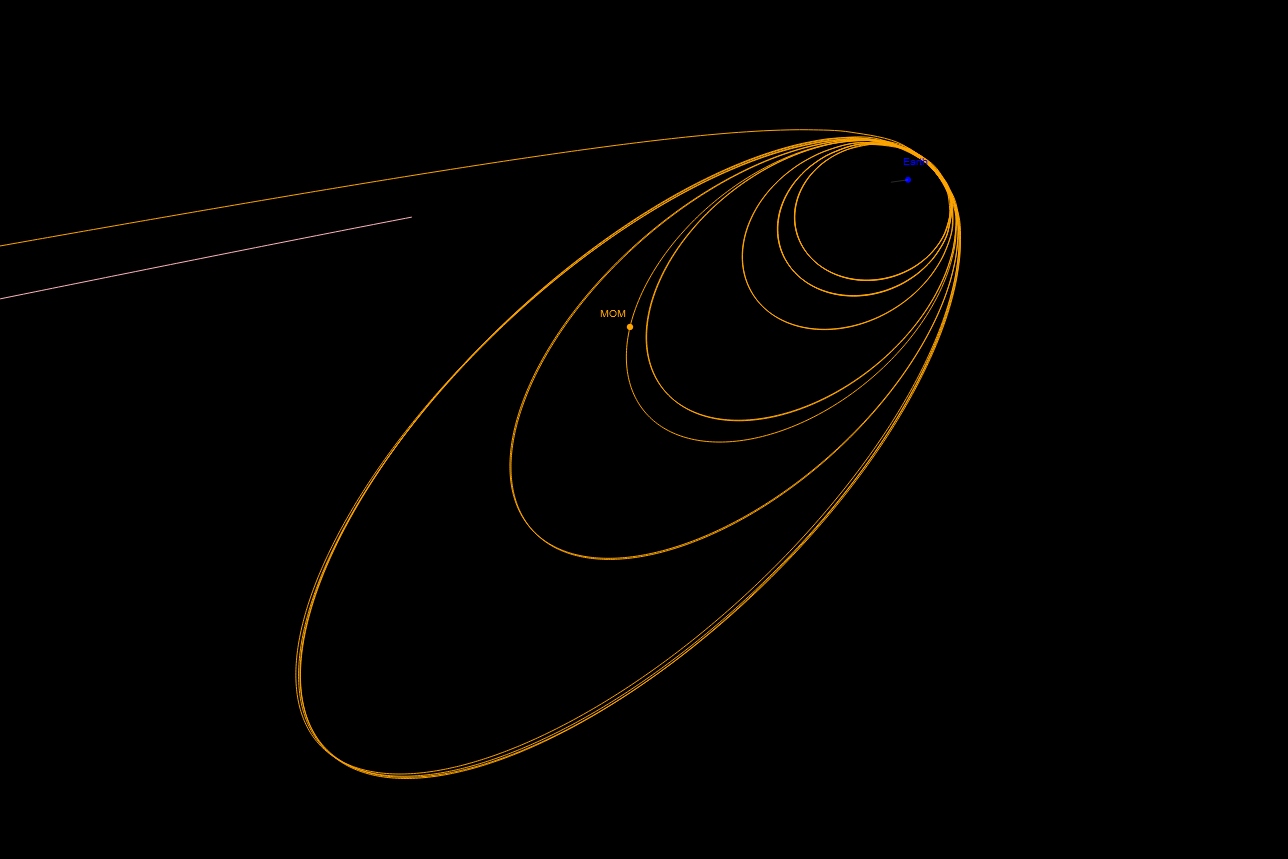
Mars Orbiter Mission
The Mars Orbiter Mission (MOM), also called Mangalyaan
(ISRO, Wikipedia)
is a space probe orbiting Mars since 24 September 2014.
It was launched on 5 November 2013 by the Indian Space Research Organisation (ISRO).
It is India's first interplanetary mission and it made it the fourth space agency to achieve Mars orbit,
after Roscosmos, NASA, and the European Space Agency.
It made India the first Asian nation to reach Martian orbit and the first nation in the world to do so on its maiden attempt.
GitHub
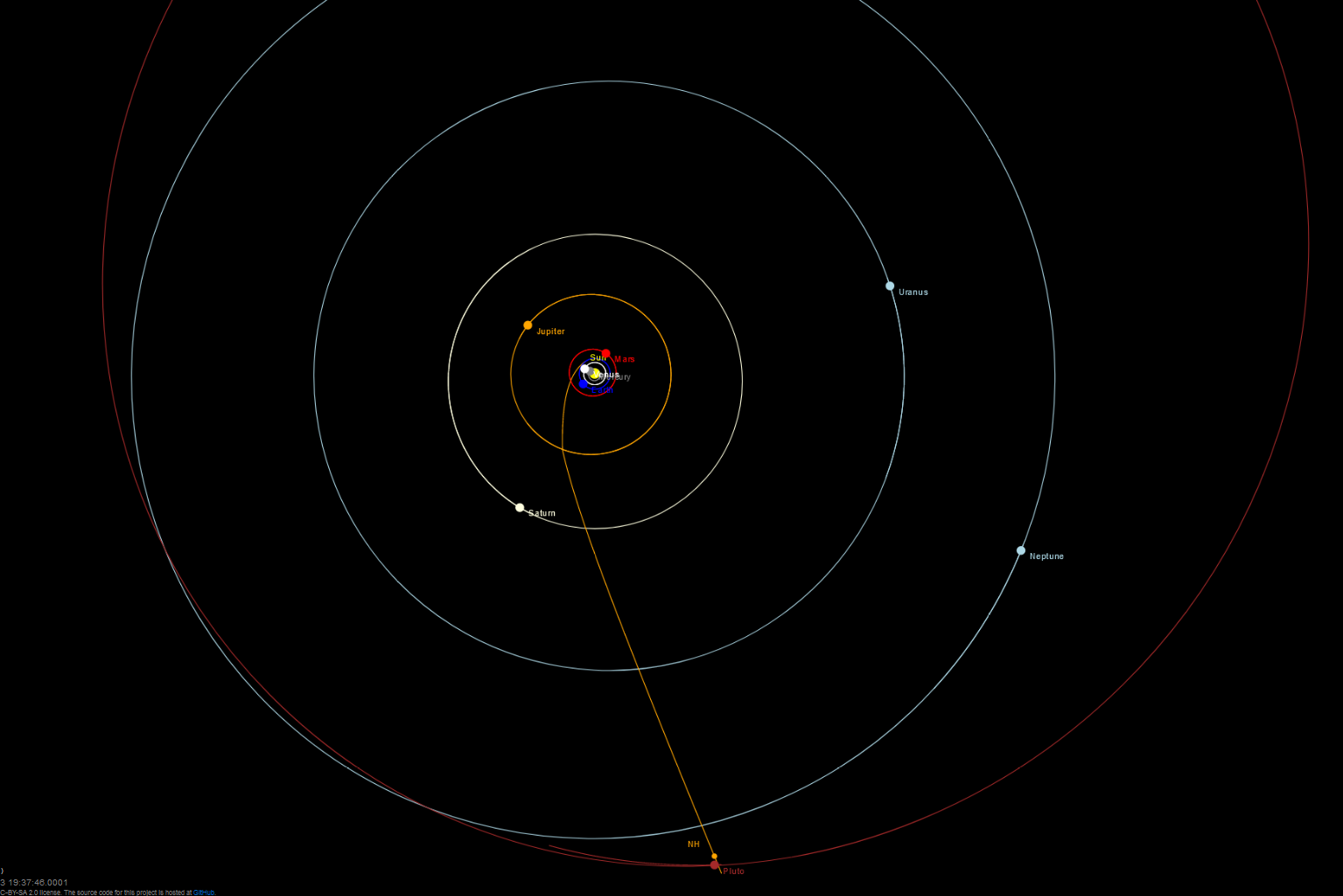
New Horizons
New Horizons (NASA,
Wikipedia)
is an interplanetary space probe that was launched as a part of NASA's New Frontiers program.
Engineered by the Johns Hopkins University Applied Physics Laboratory (APL) and the Southwest Research Institute (SwRI),
with a team led by Alan Stern, the spacecraft was launched in 2006 with the primary mission to perform a flyby study of the Pluto system in 2015,
and a secondary mission to fly by and study one or more other Kuiper belt objects (KBOs) in the decade to follow,
which became a mission to 486958 Arrokoth. It is the fifth space probe to achieve the escape velocity needed to leave the Solar System.
Cinematography
As crazy as it may sound, I did cinematography for an indie movie
Antahkaran (2015).
I also co-produced it along with a couple of friends.
The movie was directed by Rag Mayur (Wikipedia, IMDB, Instagram)
and Anil Nainwal and the cast included Shweta Gupta (IMDB,
Instagram), Srinivas Shetty, Naveen Tater, and Reha Gupta.
It was an amazing learning experience for me where I had to work outside my comfort zone.
Eventually, it turned out to be an unforgettable and enjoyable experience with a team of passionate people who had a dream to accomplish.